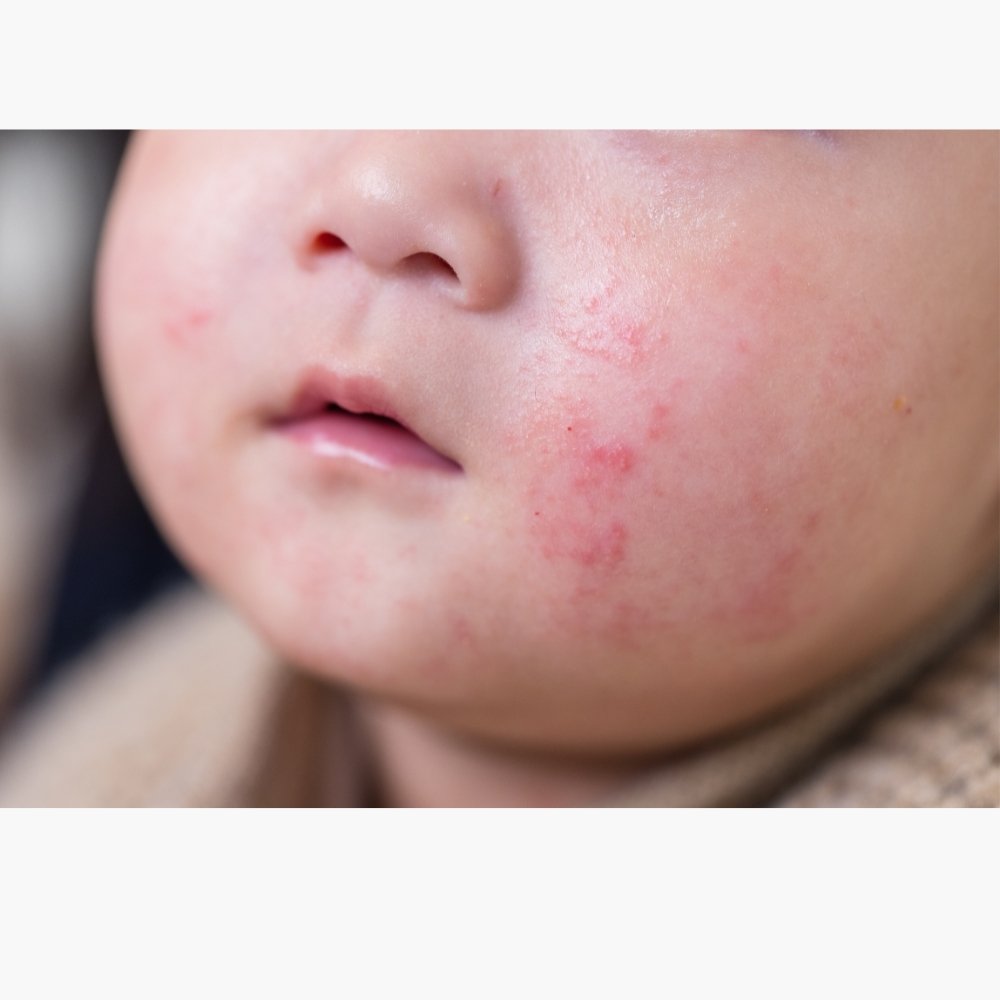
Watching your baby struggle with the red, itchy, and uncomfortable patches of eczema can be heartbreaking for any parent. You feel helpless, and you have so many questions: What is causing this? Did I do something wrong? How can I make it better?You are not alone. Baby eczema, also known as atopic dermatitis, is one of the most common skin conditions in infants. The good news is that with the right information and care routine, you can manage the flare-ups, soothe your baby’s skin, and bring them significant relief.This guide will walk you through everything you need to know about baby eczema treatment, its causes, and how to identify potential triggers, including diet.
What is Baby Eczema and What Does It Look Like?
Eczema is a condition where the skin’s barrier is weakened, making it less able to retain moisture and protect against irritants and allergens. This results in skin that is dry, inflamed, itchy, and red.In babies, eczema often appears on the:
- Cheeks and scalp
- Outer surfaces of elbows and knees
- Trunk (chest, back, and tummy)
The affected skin might look like dry, scaly patches or tiny red bumps. In more severe cases, these patches can become weepy, crusty, and intensely itchy, which is particularly distressing for a little one.
What Causes Eczema in Babies?
One of the most common questions parents ask is, “what causes eczema in babies?” It’s not caused by a single thing but rather a combination of factors:
- Genetics: Eczema often runs in families. If a parent or sibling has eczema, asthma, or hay fever, a baby is more likely to develop it.
- A Sensitive Immune System: The immune system in babies with eczema can overreact to certain triggers, causing inflammation (the redness and itching).
- A Weakened Skin Barrier: The “glue” that holds skin cells together is not as strong in babies with eczema. This allows moisture to escape easily (causing dryness) and irritants to get in easily (causing flare-ups).
Common Triggers That Can Cause an Eczema Flare-Up
While the underlying cause is genetic, specific triggers can make baby eczema worse. Identifying and managing these is key to treatment.
- Dry Skin: This is the number one trigger. When skin loses moisture, it becomes brittle, itchy, and prone to flaring.
- Irritants: Soaps with fragrances, harsh detergents, perfumes, and certain fabrics like wool or polyester can directly irritate the skin.
- Heat and Sweat: Overheating and sweating can make the itchiness much worse.
- Drool: Saliva can irritate the delicate skin on a baby’s cheeks, chin, and neck.
- Allergens: Environmental allergens like dust mites, pet dander, and pollen can sometimes trigger a flare-up.
- Food Allergies: In some babies, certain foods can be a trigger. This is more common in infants with moderate to severe eczema.
The Role of Diet: Foods That Cause Eczema in Breastfed Babies
For a small percentage of infants, food allergies can be a significant eczema trigger. If you are breastfeeding, tiny proteins from the food you eat can pass through your breast milk to your baby.So, what about foods that cause eczema in breastfed babies? The most common culprits are:
- Cow’s Milk (Dairy)
- Eggs
- Soy
- Peanuts
- Wheat
It is crucial not to eliminate foods from your diet without medical guidance. If you suspect a food allergy, keep a detailed food diary, tracking what you eat and how your baby’s skin reacts over the next 24-48 hours. Discuss your findings with your pediatrician or an allergist. They may recommend a supervised elimination diet to confirm the trigger.For formula-fed babies with a suspected cow’s milk allergy, a doctor might recommend switching to a hypoallergenic formula.When your baby starts solids, the list of eczema in babies foods to avoid (if they are a confirmed trigger) remains the same. Introduce new foods one at a time, waiting 3-4 days between each, to monitor for any skin reactions.
The Core of Baby Eczema Treatment: The “Soak and Seal” Method
The most effective strategy for managing baby eczema is a consistent, gentle skincare routine focused on hydration. The “Soak and Seal” method is the gold standard recommended by dermatologists.
Step 1: Soak (The Bath) Give your baby a short, lukewarm bath lasting no more than 10 minutes. Hot water can strip the skin of its natural oils. Use a gentle, fragrance-free, soap-free cleanser only where needed (like the diaper area). Avoid bubble baths.
Step 2: Seal (The Moisturizer) This is the most critical step. As soon as you take your baby out of the bath, pat them gently dry with a soft towel, leaving the skin slightly damp. Immediately—within three minutes—apply a thick layer of fragrance-free moisturizer or ointment all over their body. This seals the moisture from the bath into the skin.Choose a thick cream or ointment (like petroleum jelly or products with ceramides) over a thin lotion, as they are more effective at creating a protective barrier. Moisturize at least twice a day, and more often on areas that seem particularly dry.
Final Tips for Managing Baby Eczema
- Keep Nails Short: Prevent skin damage from scratching by keeping your baby’s nails trimmed.
- Choose Soft Fabrics: Dress your baby in soft, breathable fabrics like 100% cotton.
- Use a Gentle Laundry Detergent: Wash all clothes and bedding in a fragrance-free, dye-free detergent.
- Control the Temperature: Keep your home cool to prevent overheating and sweating.
- Consult Your Pediatrician: For moderate to severe eczema, your doctor may prescribe a mild topical steroid cream. These are safe and very effective when used as directed to calm inflammation during a bad flare-up.
Living with baby eczema is a marathon, not a sprint. By understanding the causes, identifying triggers, and sticking to a consistent “Soak and Seal” routine, you can effectively manage the condition and keep your baby comfortable, happy, and thriving.