Most people blame hair damage on heat tools or chemicals.
But for many, the real problem is quieter and far more common.
It’s the routine.
The way hair is washed, conditioned, styled, and handled week after week slowly changes its strength. Nothing dramatic happens overnight. Instead, hair becomes drier, weaker, and harder to manage without an obvious reason.
If your hair feels worse despite “taking care of it,” hair damage from the wrong routine may be the missing explanation.
How the Wrong Hair Routine Slowly Damages Your Hair
Hair damage from the wrong routine happens when everyday habits consistently work against your hair instead of supporting it.
Hair needs balance.
Not too much cleansing. Not too little conditioning. Not constant manipulation.
When routines don’t match hair type, scalp needs, or lifestyle, the protective cuticle layer weakens. Over time, hair loses moisture, flexibility, and strength even without heat styling.
Overwashing: When Clean Hair Becomes Weak Hair
One of the most common routine mistakes is washing hair too frequently.
Shampoo is designed to remove oil, sweat, dirt, and buildup. But natural oils also play a protective role. They keep hair flexible and reduce friction between strands.
When hair is washed too often, especially with strong shampoos, these oils don’t get a chance to replenish. Hair may feel fresh for a few hours, then dry and rough by the end of the day.
A common real-world example is someone who washes daily to control oiliness. The scalp responds by producing even more oil, while the lengths become dry and brittle. Over time, breakage increases not because hair is “falling,” but because it’s snapping.
Using the Wrong Shampoo for Your Hair Type
Another major contributor to routine-related damage is using a shampoo that doesn’t suit your hair or scalp.
Many shampoos are formulated for oil control or deep cleansing. These can be helpful occasionally, but when used regularly on dry, damaged, or color-treated hair, they strip away moisture and weaken the cuticle.
On the other end, overly rich or heavy shampoos can leave fine hair limp and coated, leading to buildup that blocks moisture from entering the strand.
The result in both cases is hair that looks dull, feels unresponsive, and becomes harder to style over time.
The issue isn’t the brand, it’s the mismatch.
Conditioner Misuse: Skipping It or Overdoing It
Conditioner is often misunderstood, and both extremes can cause problems.
Skipping conditioner leaves the cuticle exposed. Hair becomes rough, tangles easily, and breaks more during brushing. This is especially damaging for longer hair, where the ends are older and more fragile.
Overusing conditioner, especially heavy formulas applied to the scalp or roots, can cause buildup. Hair may feel soft at first but becomes limp, greasy, or lifeless with repeated use.
A balanced approach conditioning mid-lengths and ends, adjusting frequency based on hair condition supports strength without weighing hair down.
Protein Overload: When “Repair” Products Backfire
Protein is essential for hair strength, but too much protein can be damaging.
Many “repair” products contain keratin or other proteins designed to reinforce weak strands. Used occasionally, they help. Used constantly, they can make hair stiff and brittle.
This is known as protein overload.
Hair affected by protein overload often feels hard rather than soft. It breaks easily, especially when dry, and doesn’t respond well to conditioning.
People often mistake this for severe damage and add even more repair products making the problem worse.
Product Buildup and Over-Layering
Modern routines often involve multiple products used together: leave-ins, creams, oils, serums, sprays.
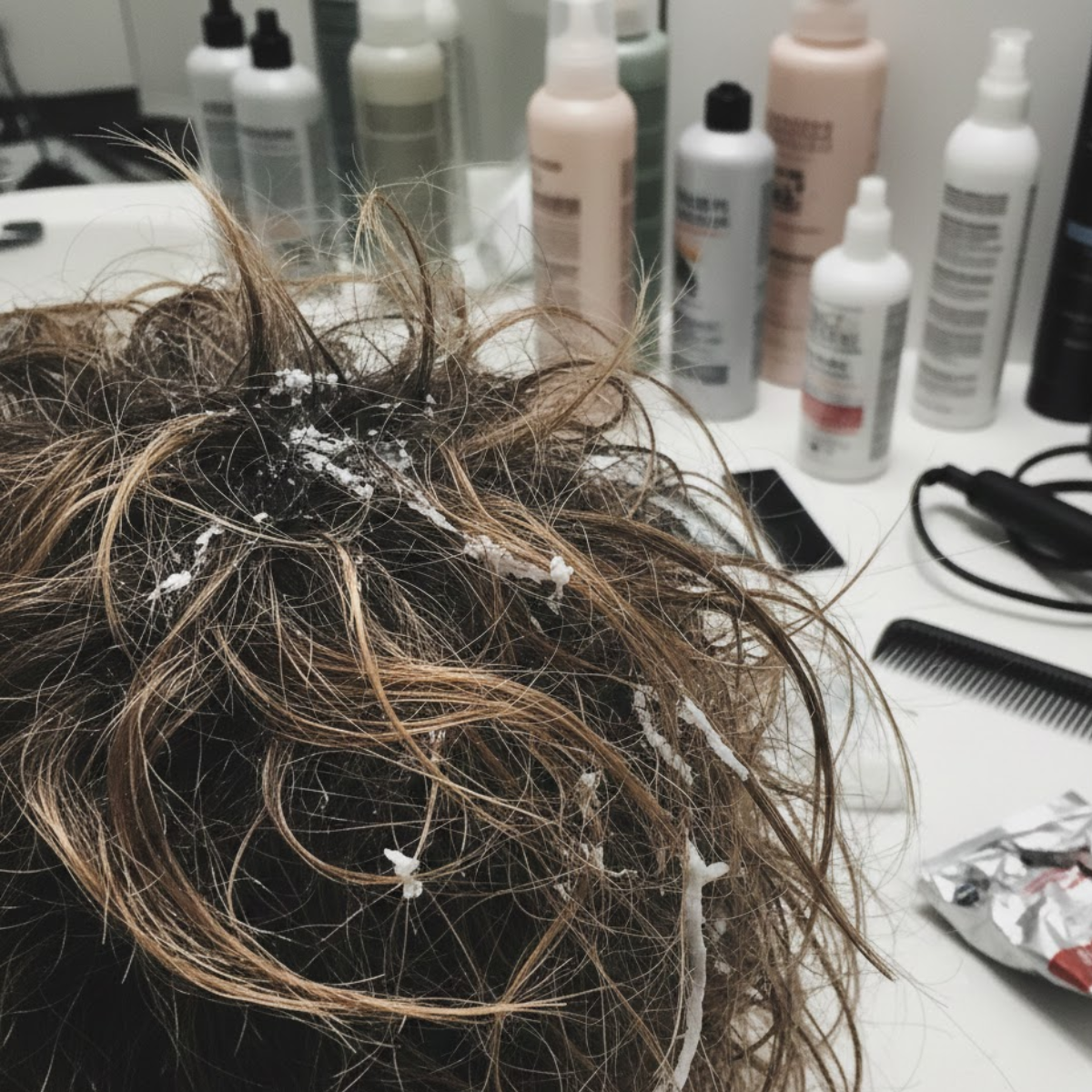
Individually, these products aren’t harmful. Over time, without proper cleansing, they can coat the hair shaft and prevent moisture from penetrating.
Hair may look dull, feel heavy, and lose movement. Styling becomes harder, not easier.
Occasional gentle clarifying not aggressive stripping helps reset the hair and improve product performance.
Mechanical Damage: How Handling Hair the Wrong Way Causes Breakage
Hair is most vulnerable when wet.
Brushing aggressively, detangling without slip, twisting hair tightly, or rubbing it harshly with a towel places physical stress on weakened strands. Over time, this leads to breakage that’s often mistaken for hair fall.
A common example is someone who rushes through detangling wet hair before work. Months later, they notice shorter, uneven pieces around the crown and ends.
Gentler handling alone can significantly reduce this type of damage.
Can Hair Damage From the Wrong Routine Be Fixed?
Routine-related damage is often more manageable than heat or chemical damage.
While damaged hair itself cannot regenerate, changing habits prevents further weakening and allows hair to behave better.
Once harsh practices stop, many people notice improvement within weeks:
Hair feels softer
Breakage slows
Styling becomes easier
This is why identifying routine mistakes early makes such a difference.
How to Correct a Damaging Hair Routine
Fixing routine-related hair damage doesn’t require a complete reset. It requires simplification.
Washing less frequently, choosing a shampoo suited to your scalp, conditioning consistently but lightly, and avoiding constant “repair” treatments restores balance over time.
Pay attention to how hair feels, not just how it looks after styling. Hair that’s improving becomes easier to manage even without heavy products.
Consistency matters more than chasing trends.
How Long Does It Take to See Improvement?
Routine-related damage often improves faster than other types.
Within two to four weeks, hair typically feels softer and less fragile. Over the next few months, breakage reduces as moisture balance improves.
Long-term improvement depends on sticking with better habits, not switching products every wash.
How to Avoid Hair Damage From the Wrong Routine in the Future
Hair care doesn’t need to be complicated to be effective.
Matching products to your hair type, washing only when necessary, conditioning regularly, and handling hair gently go a long way. Avoid copying routines that don’t suit your lifestyle or hair texture.
Simple, consistent care protects hair far better than complex routines.
Final Thoughts: When Hair Damage Is a Habit Problem, Not a Hair Problem
Hair damage from the wrong routine is common because routines become automatic.
What worked years ago may not suit your hair today. Changes in age, environment, stress, and lifestyle all affect how hair responds.
When routines are adjusted thoughtfully, hair often improves without drastic measures.
For a complete understanding of all types of hair damage and how they connect, return to damaged hair and how to repair it naturally and continue building habits that support your hair long-term not work against it.