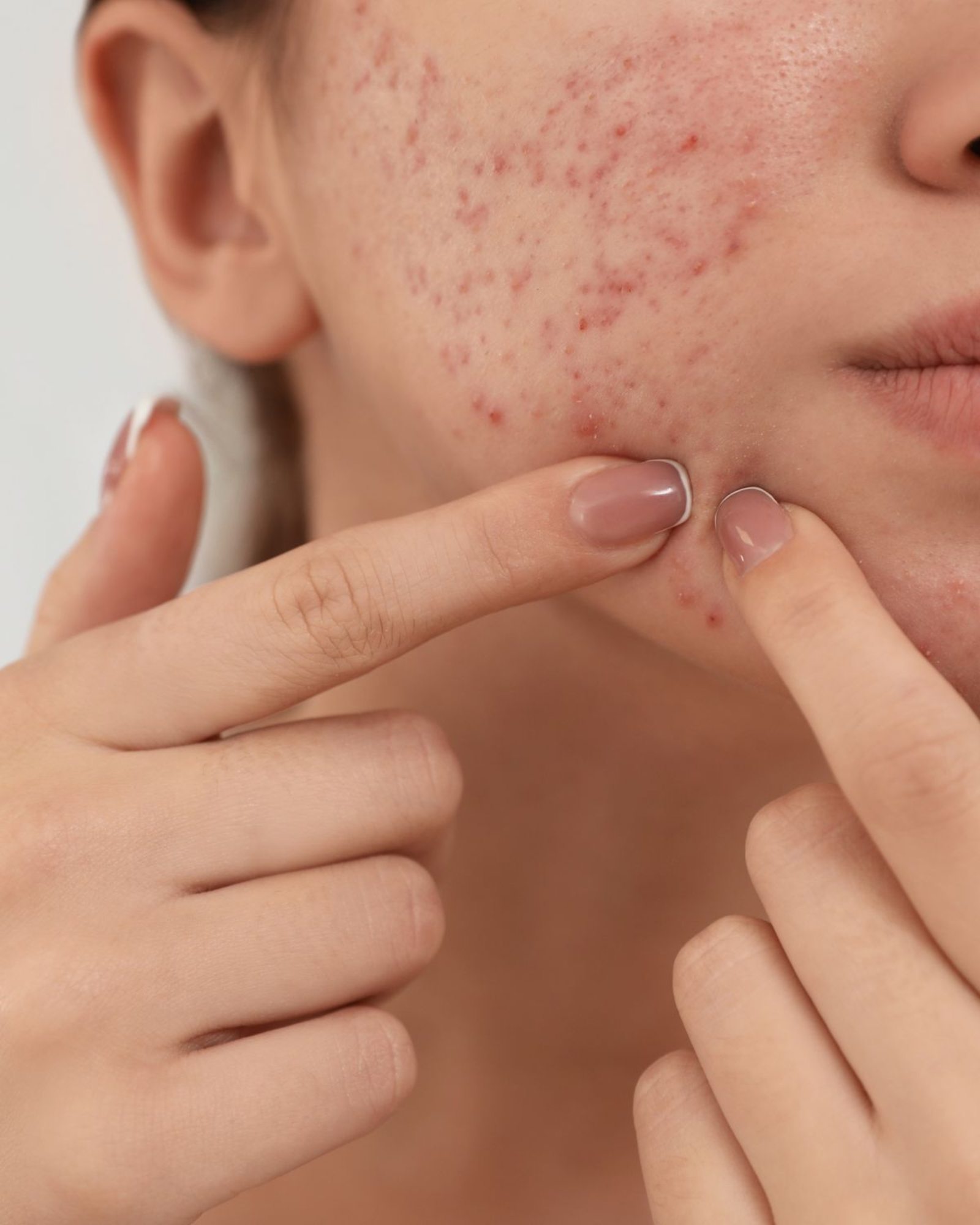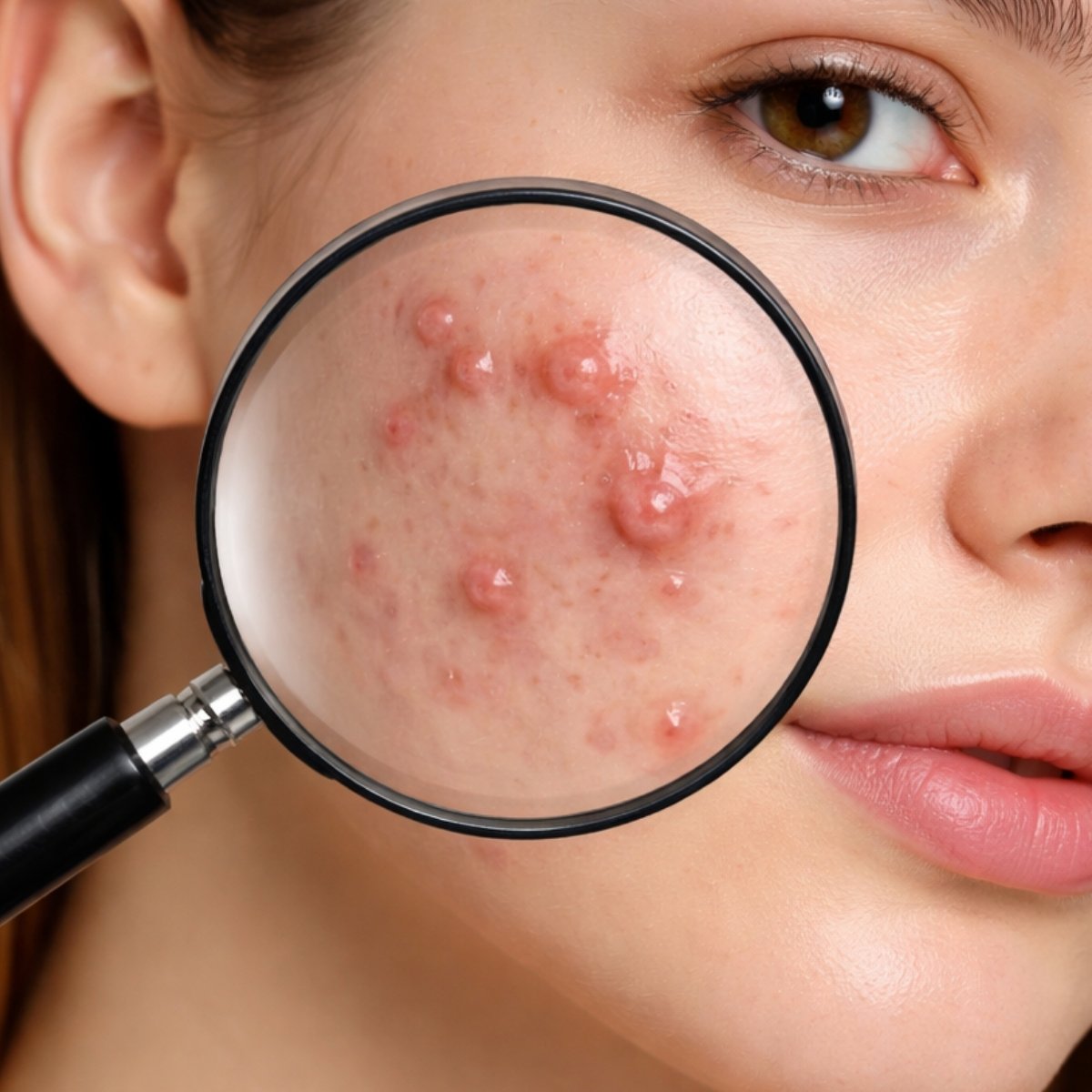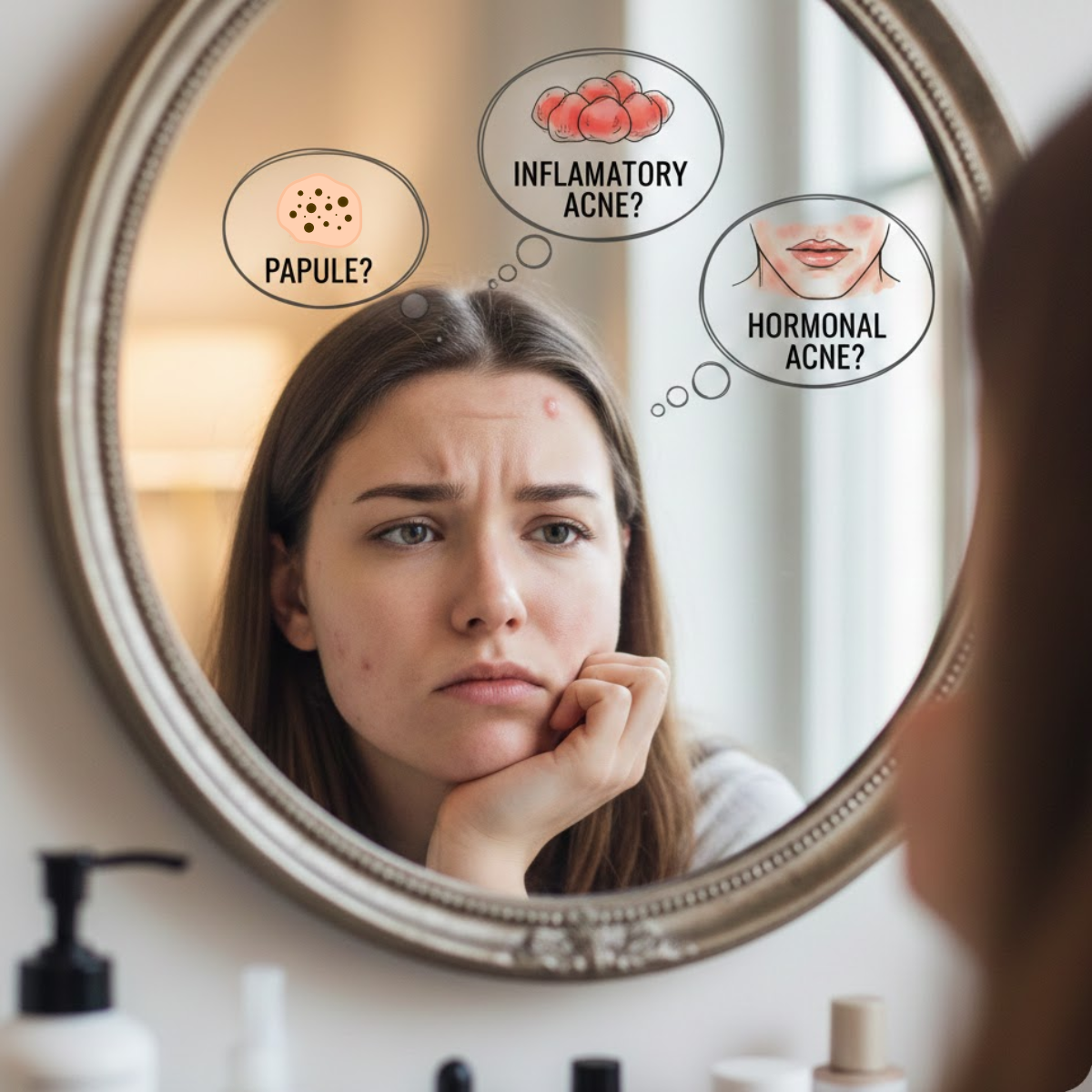
Hormonal acne is one of the most frustrating types of acne.
It keeps coming back.
It appears in the same area.
It gets worse before periods.
And sometimes, nothing seems to work.
If you have painful breakouts around your chin or jawline, hormones may be the reason.
Let’s understand hormonal acne in a simple and clear way.
What Is Hormonal Acne?
Hormonal acne is acne that is triggered by changes in hormones.
It is not a different “shape” of acne.
It describes why acne is happening, not how it looks.
Most hormonal acne appears as:
-
Deep painful bumps
-
Nodules
-
Cysts
This is why many people confuse hormonal acne with cystic acne.
But remember:
Hormonal acne = cause
Cystic acne = appearance
What Causes Hormonal Acne?
Hormonal acne is mainly linked to androgens.
Androgens are hormones that increase oil production in the skin.
When oil increases:
-
Pores clog
-
Bacteria grow
-
Inflammation happens
-
Acne forms
Let’s look at common triggers.
1️⃣ Menstrual Cycle
Many women break out:
-
7–10 days before periods
-
Around chin and jawline
This happens because estrogen drops and androgens become more active.
2️⃣ PCOS (Polycystic Ovary Syndrome)
PCOS increases androgen levels.
Signs include:
-
Irregular periods
-
Excess facial hair
-
Weight gain
-
Persistent jawline acne
Hormonal acne in PCOS is often severe and long-lasting.
3️⃣ Pregnancy
Hormone levels change rapidly during pregnancy.
Some women develop acne.
Others notice their acne improves.
4️⃣ Stopping Birth Control Pills
Birth control pills regulate hormones.
When you stop them, hormones fluctuate again.
This can trigger breakouts.
5️⃣ Stress
Stress increases cortisol.
Cortisol increases oil production.
More oil means more clogged pores.
Stress acne often overlaps with hormonal acne.
Signs of Hormonal Acne
How do you know if your acne is hormonal?
Here are common signs:
✔ Breakouts on chin and jawline
✔ Deep, painful pimples
✔ Acne that comes and goes with your cycle
✔ Acne after age 25
✔ Acne that does not respond to basic treatments
Hormonal acne is more common in adult women, but men can also experience it.
Where Does Hormonal Acne Appear?
Most common areas:
-
Chin
-
Jawline
-
Lower cheeks
-
Neck
Teenage acne usually affects the T-zone (forehead and nose).
Adult hormonal acne usually affects the lower face.
This location pattern is important for diagnosis.
Why Hormonal Acne Is Hard to Treat
Hormonal acne starts from inside the body.
That is why:
-
Surface treatments alone may not fully solve it
-
It keeps coming back
-
It becomes chronic
If the root cause is not managed, breakouts repeat every month.
How to Treat Hormonal Acne
Treatment depends on severity.
Let’s break it down clearly.
1️⃣ Topical Treatments (For Mild to Moderate Cases)
These help control oil and inflammation.
Common ingredients:
-
Salicylic acid (unclogs pores)
-
Benzoyl peroxide (kills bacteria)
-
Retinoids (prevent clogged pores)
-
Azelaic acid (reduces redness and bacteria)
These are helpful but may not fully control severe hormonal acne.
2️⃣ Oral Treatments (For Moderate to Severe Cases)
A doctor may recommend:
-
Oral contraceptive pills
-
Spironolactone
-
Oral antibiotics (short term)
-
Isotretinoin (for severe cystic acne)
These target hormones or reduce oil production.
Medical supervision is important.
3️⃣ Lifestyle Adjustments
Small changes can help reduce flare-ups.
✔ Manage stress
✔ Sleep properly
✔ Reduce high sugar intake
✔ Avoid picking pimples
✔ Use non-comedogenic skincare
While lifestyle alone cannot cure hormonal acne, it can reduce severity.
Skincare Routine for Hormonal Acne
A simple routine works best.
Morning:
-
Gentle cleanser
-
Lightweight treatment serum
-
Oil-free moisturizer
-
Sunscreen
Night:
-
Gentle cleanser
-
Treatment (retinoid or acne serum)
-
Moisturizer
Avoid over-exfoliating.
Too many active ingredients can damage your skin barrier and make acne worse.
Can Hormonal Acne Be Cured Permanently?
Hormonal acne cannot always be permanently cured.
But it can be controlled.
Many people see major improvement with:
-
Consistent skincare
-
Hormone-regulating treatment
-
Proper medical guidance
Early treatment reduces risk of scarring.
When to See a Doctor
You should consult a dermatologist if:
-
Acne is painful and deep
-
You notice scarring
-
Acne is linked with irregular periods
-
Over-the-counter products are not working
Professional evaluation is important in persistent cases.
Hormonal Acne vs Regular Acne
Let’s quickly compare:
Regular acne:
-
Random breakouts
-
Mostly T-zone
-
Responds to basic treatment
Hormonal acne:
-
Jawline focus
-
Cycle-related
-
Deep and painful
-
Often resistant to simple products
Understanding the difference helps you choose the right approach.
Final Thoughts
Hormonal acne is caused by internal hormone changes that increase oil production in the skin. It often appears as deep, painful pimples around the chin and jawline, especially before periods or during times of hormonal imbalance like PCOS or stress. Unlike regular acne, hormonal acne tends to repeat in cycles and may not respond to simple surface treatments alone. Managing it requires a combination of proper skincare, lifestyle support, and sometimes medical treatment. The key is understanding that hormonal acne starts from within, so treating both the internal cause and external symptoms gives the best results.