
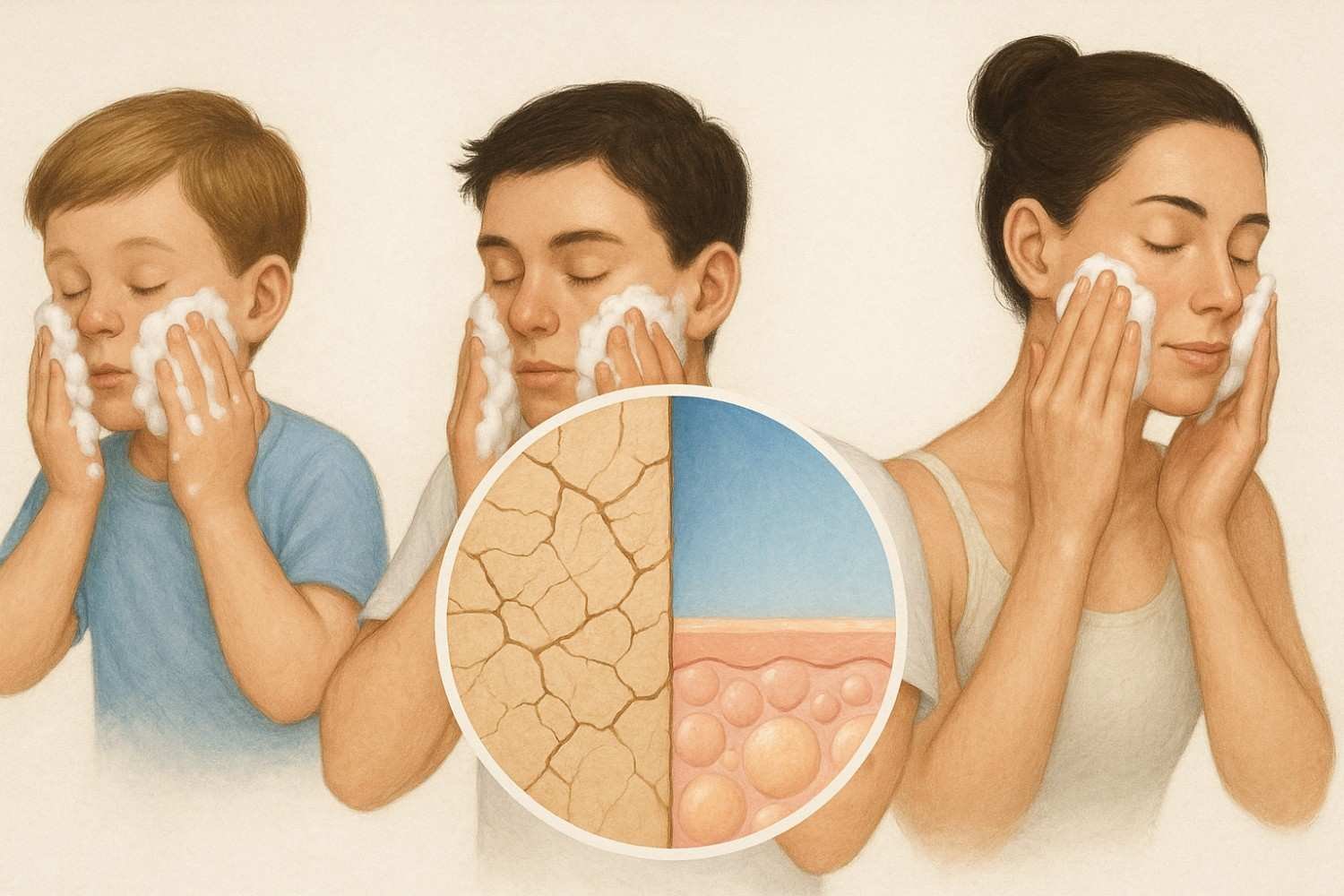
It sounds strange, doesn’t it? You’ve been washing your face every single day since childhood — but no one ever really taught you how to do it correctly. Most people just grab a bar of soap, splash some water, and move on. Yet this simple daily habit might be the reason your skin feels tight, dull, or constantly irritated.
If you often wonder why your skin breaks out or looks tired even after using expensive products, the problem might not be your creams or serums — it might be your cleansing method.
In this guide, we’ll break down how often you should wash your face, how to do it properly, and why gentle cleansing can solve more skin problems than you think.
How to Wash Your Face the Right Way
You should wash your face twice a day — once in the morning and once at night.
If you have extremely dry or sensitive skin, cleansing once a day (at night) may be enough.
But what matters even more than how often is how you do it. Using harsh soaps or scrubbing aggressively damages your skin barrier — the protective layer that keeps moisture in and irritants out. Once that barrier is compromised, your skin becomes dry, oily, or acne-prone.
The goal of cleansing is not to make your skin feel “squeaky clean” but to leave it soft, calm, and balanced.
Why Cleansing Matters More Than You Think
Cleansing isn’t just about washing off visible dirt. It’s the foundation of healthy skin — the first step that determines how well your moisturizer, serum, or sunscreen works.
When done right, cleansing removes:
- Excess oil and sweat
- Dust and pollution particles
- Sunscreen, makeup, and bacteria buildup
But when done wrong, it strips away natural oils and disrupts your skin’s microbiome. That leads to clogged pores, inflammation, and breakouts.
Caring Caution: Your skin barrier acts like a shield protecting against dehydration and bacteria. Over-cleansing weakens it, making your skin sensitive, red, or acne-prone. [Source: American Academy of Dermatology]
How to Wash Your Face the Right Way
Let’s simplify the process. You only need a few steps — but each one matters.
Step 1: Choose the Right Cleanser
Forget soaps. Soaps have a high pH and strip your natural oils, leaving your skin dry and irritated. Instead, use a pH-balanced, gentle face wash that cleans without damaging your barrier.
Look for ingredients like:
- Glycerin to hydrate and soften
- Panthenol (Vitamin B5) to calm and repair
- Lactic Acid to mildly exfoliate while maintaining moisture
If your face feels tight, flaky, or “too clean” after washing — your cleanser is too harsh.
Step 2: Use Lukewarm Water
Hot water feels soothing but removes essential oils from your skin. Cold water, on the other hand, doesn’t clean effectively. The ideal temperature is lukewarm — warm enough to dissolve dirt and oil, but gentle enough to protect your skin barrier.
Step 3: Wash Gently
Apply your cleanser with clean hands. Gently massage in circular motions for 20 to 30 seconds. This is long enough to remove impurities without irritating your skin.
Avoid using loofahs, sponges, or rough towels. Your fingertips are your best tools.
Pro Tip: If you need to “scrub” to feel clean, you’re doing more harm than good. Gentle cleansing twice a day is far more effective than aggressive washing once. [Source: PubMed study]
Step 4: Pat Dry, Don’t Rub
After rinsing, gently pat your face dry with a clean, soft towel. Never rub — it causes friction and micro-tears that weaken your barrier. Also, keep a separate towel just for your face to prevent bacterial transfer.
Step 5: Moisturize Immediately
Within 30 seconds of washing, apply a moisturizer while your skin is still slightly damp. This locks in hydration and prevents dryness.
Morning vs. Night Cleansing
You should cleanse at both times, but for different reasons.
Morning Cleansing:
Overnight, your skin releases oil, sweat, and collects bacteria from your pillowcase. Washing your face in the morning removes that buildup and preps your skin for moisturizer and sunscreen.
Night Cleansing:
This one is non-negotiable. By the end of the day, your face is layered with sunscreen, pollution, dust, and bacteria. Sleeping with all that on your skin leads to clogged pores and dullness. Cleansing before bed allows your skin to repair itself while you sleep.
How Over-Washing Damages Your Skin
Washing your face more than twice a day doesn’t make your skin cleaner — it makes it weaker. When you strip away natural oils, your body overcompensates by producing excess sebum. The result? Oily yet dehydrated skin, breakouts, and sensitivity.
Signs you’re over-cleansing include:
- Tightness or dryness after washing
- Flakiness or peeling
- Sudden oiliness
- Redness or itching
- Breakouts, especially around the mouth and cheeks
If this sounds familiar, scale back. Use a gentle cleanser and give your skin a week to rebalance. Most people see improvement in texture and comfort within days.
Soap vs. Face Wash — What’s the Difference?
Many people, especially in South Asia, still use regular soaps for the face. It feels practical, but soaps are designed for the body — not delicate facial skin.
Regular soaps have a pH around 9–10, while your skin’s natural pH is about 5.5. That mismatch disrupts the acid mantle — your skin’s protective layer — causing dryness, breakouts, and dullness.
Face washes, on the other hand, are formulated closer to your skin’s natural pH and often include moisturizing or soothing ingredients. Switching from soap to a gentle face wash is one of the fastest ways to improve your skin’s texture and glow.
Final Thoughts
Cleansing is something we all do — but few of us do it right. The goal isn’t to scrub your skin until it feels squeaky clean; it’s to treat it with care so it stays balanced, hydrated, and clear.
Start small:
- Use a gentle, pH-balanced face wash
- Wash twice a day (morning and night)
- Avoid hot water and harsh scrubbing
- Always moisturize right after
Your skin doesn’t need more products — it needs better habits. And once you get cleansing right, you’ll notice that everything else — hydration, glow, texture — starts falling into place.