We need to talk about salicylic acid. You’ve heard the buzz—it’s the holy grail for blackheads and breakouts. But you’ve also heard the whispers: “It dried out my skin,” “It made me purge for weeks,” or “It just didn’t work.”
So what’s the truth?
If you’re staring at a bottle of it, wondering if it will be your skin’s savior or its next big mistake, you’re in the right place. The answer is: it can be both. Here’s how to figure out which side you’ll land on.
What Exactly Is Salicylic Acid? (The Science)
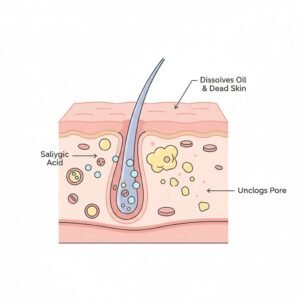
Salicylic acid is a Beta Hydroxy Acid (BHA). Its superpower is that salicylic acid is oil-soluble. This means it can bypass the water-based surface of your skin and dive deep into your pores, past the oil and gunk, to exfoliate from within.
You’ll find this ingredient in various forms, including gentle cleansers, potent serums, and targeted spot treatments.
Key Takeaway: Salicylic acid is an oil-soluble exfoliant that cleans out your pores from the inside, making it uniquely effective for clogged pores and oily skin.
Why Salicylic Acid Works Beautifully for Some People
If you have oily, congested, or acne-prone skin, salicylic acid can be a game-changer.
1. It Unclogs Pores (The Blackhead Killer)
Because it dissolves the mixture of dead skin cells and sebum, it is highly effective at clearing:
• Blackheads
• Whiteheads
• Closed comedones (small bumps under the skin)
2. It Controls Excess Oil
If your skin gets greasy or shiny fast, SA helps regulate oil production. This not only reduces shine but also starves the acne-causing bacteria that thrive in oily environments.
3. It Prevents Future Breakouts
Since it keeps pores clear, it stops new acne from forming in the first place, making it a powerful preventative tool.
Why Salicylic Acid Doesn’t Work For Everyone (And Can Worsen Skin)
Even though it’s powerful, salicylic acid isn’t a one-size-fits-all ingredient. Its strength is also its weakness.
1. If Your Skin Is Dry or Sensitive
SA can be drying. If your skin is already dry, flaky, or easily irritated (e.g., you have rosacea or eczema), it can strip your skin barrier. This leads to irritation, redness, and peeling—not improvement.
2. If You Have Hormonal or Deep Cystic Acne
Salicylic acid cannot reach deep enough to treat deep, painful cysts on its own. You may need stronger treatments like prescription retinoids, benzoyl peroxide, or hormonal treatments. SA can help with surface congestion, but won’t fix deep, painful acne alone.
3. Using It Too Often or Too Strong
Most people who say SA “damaged” their skin were simply overusing it. Overusing of salicylic acid can cause many issues like:
•Burning and stinging
•Flakiness
•More breakouts (irritation, not purging)
How to Introduce Salicylic Acid Safely (The “Low and Slow” Rule)
The #1 mistake beginners make is using salicylic acid every single day from the start. Here’s how to avoid irritation and get the best results:
|
Method
|
Product Type
|
How to Start
|
Frequency
|
|
Beginner
|
Cleanser (Wash-off)
|
Use a gentle formula.
|
2-3 times a week at night.
|
|
Intermediate
|
Toner or Serum (Leave-on)
|
Start with a low concentration (1-2%).
|
Twice a week at night.
|
|
Advanced
|
Spot Treatment
|
Apply only to the affected area.
|
As needed, but only once per day.
|
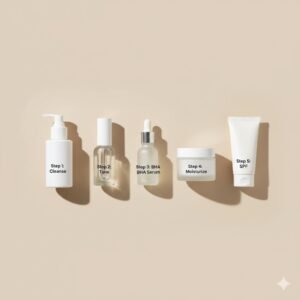
☀️ Non-Negotiable Rule: Always wear a broad-spectrum sunscreen (SPF 30+) in the morning. Salicylic acid makes your skin more sensitive to the sun, and skipping SPF will undo all your hard work and can lead to hyperpigmentation.
Purging vs. Breakout: How to Tell the Difference
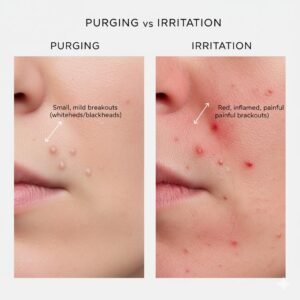
This is the most confusing part of starting any new acid. You get new pimples, but is it a good sign or a bad one?
|
Feature
|
Skin Purging (Good Sign)
|
Irritation/Breakout (Bad Sign)
|
|
Location
|
Breakouts appear in areas where you normally get pimples.
|
Breakouts appear in new areas where your skin is usually clear.
|
|
Duration
|
Should last no longer than 4-6 weeks [3].
|
Continues indefinitely, or gets worse over time.
|
|
Appearance
|
Small whiteheads, blackheads, or tiny bumps that heal quickly.
|
Red, inflamed, itchy, painful, or cystic acne.
|
|
Feeling
|
Skin may feel slightly dry, but not painful or tight.
|
Skin feels tight, stripped, burning, or itchy.
|
If you are breaking out in new places or if the irritation lasts longer than six weeks, stop using the product immediately.
Conclusion: So, Should You Try It?
Salicylic acid is a powerful tool, but it’s not a magic wand. It solves issues for many people, but as you’ve heard, it’s not suitable for everyone.
The best approach is to be a curious scientist with your own skin. Start with a gentle product, use it infrequently, and pay close attention to how your skin responds. Protect it with sunscreen, be patient through a potential purge, and don’t be afraid to stop if it feels wrong. By listening to your skin, you’ll find out if salicylic acid is the clear-skin solution you’ve been looking for.