In our journey to build a personal self-care routine, we’ve cleansed, we’ve identified our skin type, and we’ve moisturized. Now, we arrive at the single most crucial step for the long-term health and appearance of your skin: sunscreen.
If you only do one thing for your skin each day, this should be it.
Dermatologists, scientists, and skincare experts all agree on this point. Daily sun protection is the most effective action you can take to prevent premature aging and, most importantly, reduce your risk of skin cancer.
But the world of sunscreen can be confusing. What does SPF really mean? Is a higher number always better? What is “broad-spectrum”? This guide will clear up the confusion and give you the confidence to choose and use sunscreen effectively every single day.
The “Why”: Understanding the Sun’s Rays
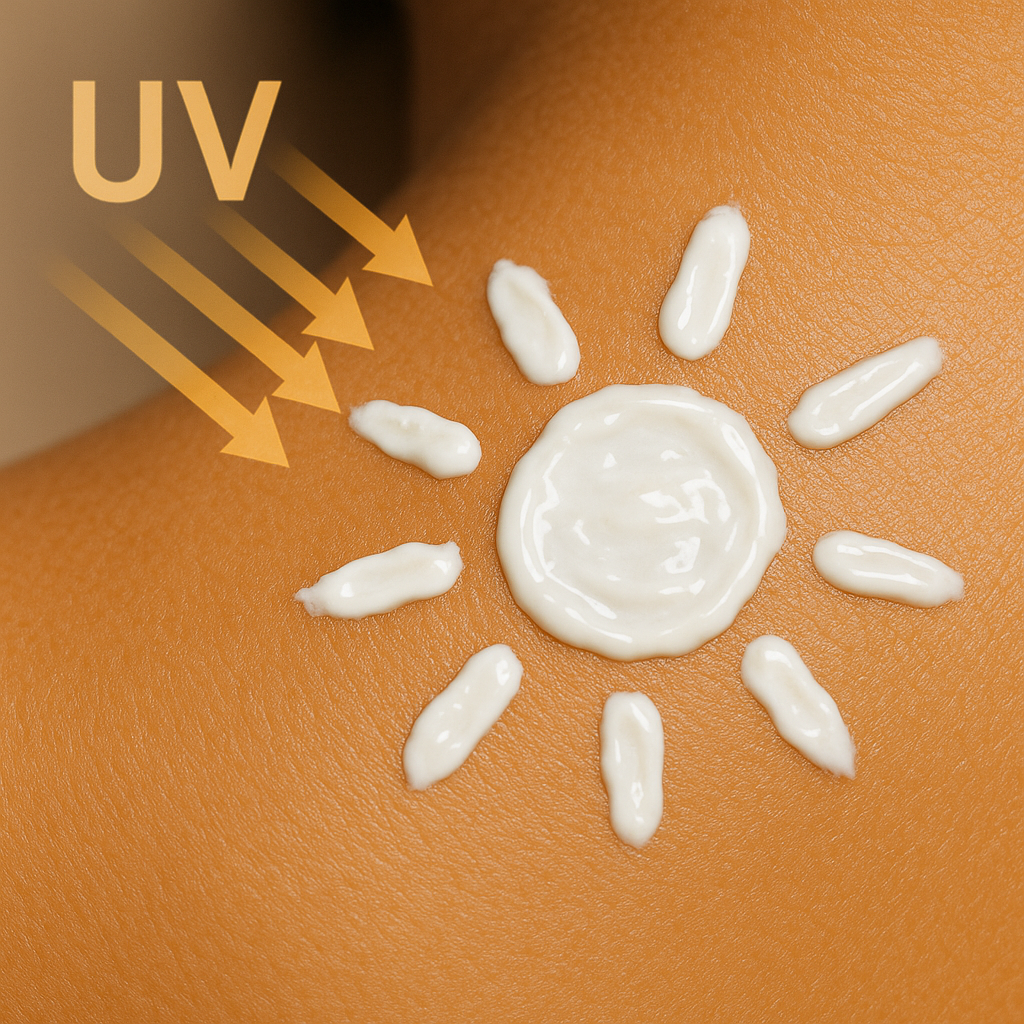
The sun emits different types of ultraviolet (UV) radiation. The two that primarily affect our skin are UVA and UVB rays. An easy way to remember the difference is:
- UVB Rays (B for Burning): These are the rays that cause sunburn. They are the primary cause of most skin cancers. They are strongest between 10 a.m. and 4 p.m. and vary in intensity by season and location.
- UVA Rays (A for Aging): These rays penetrate deeper into the skin, breaking down collagen and elastin, which leads to wrinkles, fine lines, and sagging. UVA rays are present with equal intensity during all daylight hours, all year round, and can even penetrate clouds and glass.
This is a critical point: even on a cloudy day, or when you’re sitting inside by a window, you are being exposed to aging UVA rays.
Decoding the Sunscreen Label
Let’s break down the key terms you’ll see on a bottle of sunscreen.
1. SPF (Sun Protection Factor)
- What it is: SPF is a measure of how well a sunscreen protects you from UVB (burning) rays only.
- How it works: The number tells you how much longer it would take for your skin to redden with the sunscreen on, compared to without it. For example, if you would normally burn in 10 minutes, an SPF 30 would theoretically allow you to stay in the sun for 300 minutes (10 x 30) before burning.
- The Reality: This is a lab measurement. In real life, we sweat, we touch our faces, and we often don’t apply enough. The protection level drops over time.
- Which SPF to Choose?
- SPF 30 is the standard recommendation for daily use. It blocks about 97% of UVB rays.
- SPF 50 blocks about 98% of UVB rays.
- As you can see, the increase in protection becomes much smaller with higher numbers. No sunscreen blocks 100% of rays. For most people, SPF 30 is sufficient for daily life.
2. Broad-Spectrum Protection
This is just as important as SPF, if not more so.
- What it is: “Broad-Spectrum” means the sunscreen protects you from both UVA (aging) and UVB (burning) rays.
- Why it’s non-negotiable: A sunscreen with only a high SPF number might protect you from getting a sunburn, but if it’s not broad-spectrum, you are still getting a full dose of aging UVA rays. Always, always choose a sunscreen that is labeled “Broad-Spectrum.”
Mineral vs. Chemical Sunscreen: What’s the Difference?
There are two main types of sunscreen filters. Both are safe and effective. The best one is the one you will happily wear every day.
-
Mineral Sunscreens (Physical Blockers):
- How they work: They use mineral ingredients, primarily Zinc Oxide and Titanium Dioxide, to create a physical barrier on top of the skin that sits there and reflects UV rays away.
- Pros: Gentle on the skin, less likely to cause irritation, effective immediately upon application. Excellent for sensitive or acne-prone skin.
- Cons: Can sometimes leave a white or grayish cast on the skin, especially on deeper skin tones (though modern formulas are much more elegant).
-
Chemical Sunscreens (Organic Filters):
- How they work: They use organic (carbon-based) compounds like Avobenzone, Oxybenzone, and Octinoxate. These ingredients absorb UV radiation, convert it into heat, and then release it from the skin.
- Pros: Tend to be more lightweight in texture, spread easily, and absorb into the skin without leaving a white cast.
- Cons: Need about 15-20 minutes to become effective after application. Can sometimes cause stinging or irritation for very sensitive skin types.
How to Use Sunscreen Correctly (The Part Everyone Gets Wrong)
Your sunscreen is only as good as your application.
- Use Enough: The general rule for your face and neck is two to three finger-lengths of sunscreen. Most people apply less than half the amount needed, which drastically reduces the stated SPF protection.
- Apply as the Last Step: It should be the final step in your morning skincare routine, after your moisturizer and before any makeup.
- Don’t Forget Key Areas: Apply it to your ears, the back of your neck, and your hands. These areas show signs of aging just as much as the face.
- Reapply: If you are outdoors, sweating, or swimming, you need to reapply your sunscreen every two hours. For a typical office day, a thorough morning application is often sufficient, but reapplication is never a bad idea.
Making sunscreen a daily habit is the ultimate act of future-proofing your skin. It’s a simple, powerful step that defends your skin’s health and vitality against the invisible damage of daily life. Find a formula you love, and make it as automatic as brushing your teeth. Your skin will thank you for decades to come.