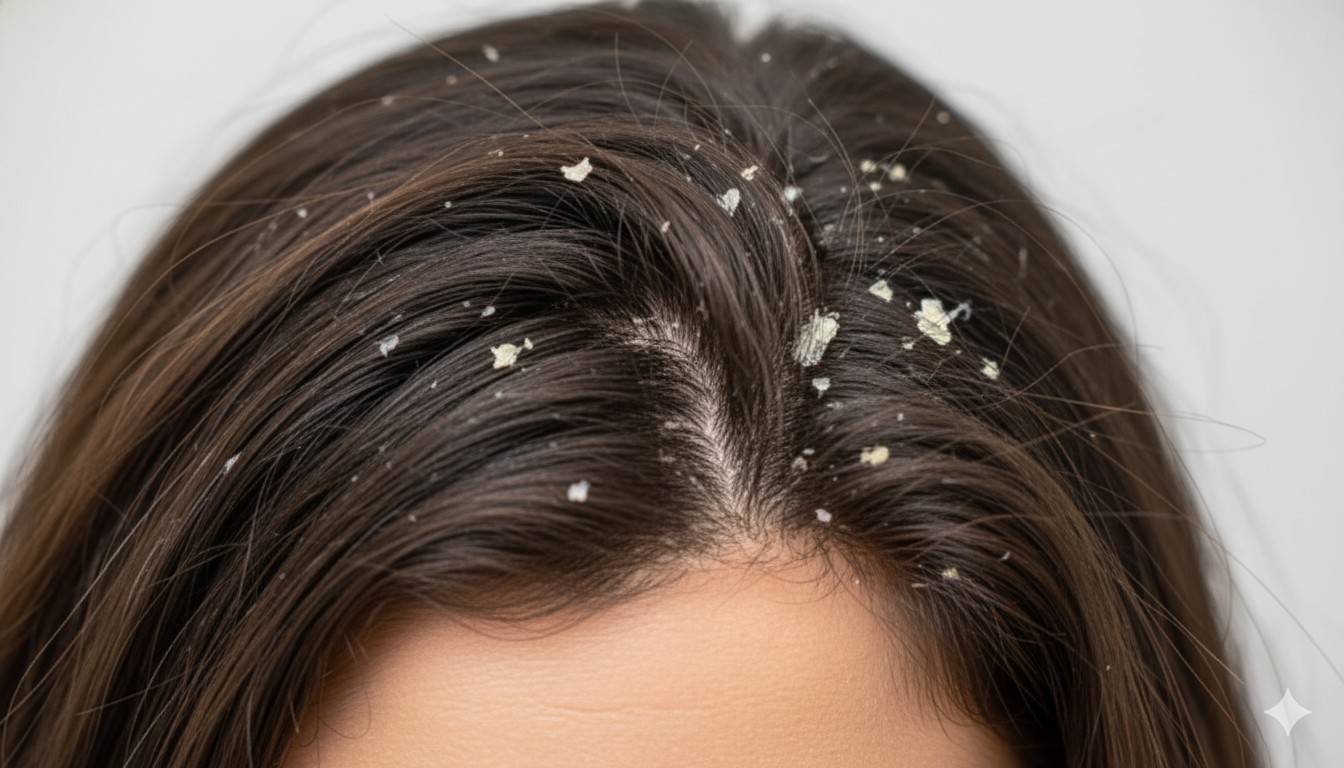
Those persistent white flakes on your shoulders and that maddening scalp itch—dandruff is more than just a minor annoyance. It can be embarrassing, uncomfortable, and a source of constant frustration. You’ve probably tried countless shampoos and “quick fixes,” only for the flakes to return.
What if you could finally understand the root cause of your dandruff and find a solution that actually lasts?
This is not another list of myths. This is your evidence-based guide to getting rid of dandruff for good.
First, What Exactly Is Dandruff? (And What It’s Not)
Before you can treat it, you need to understand what you’re fighting.
Dandruff is a common scalp condition where skin flakes off. In most cases, it is a mild form of a condition called seborrheic dermatitis.
A key player in this process is a yeast-like fungus called Malassezia globosa. This fungus lives on the scalp of most adults without causing any problems. However, for some people, the body overreacts to it, triggering irritation and an accelerated shedding of skin cells. This leads to the visible flakes we call dandruff.
Common Causes of Dandruff
- Overactive oil glands (oily scalp)
- Fungal overgrowth (Malassezia)
- Irregular hair washing or harsh shampoos
- Cold weather or dry indoor heat
- Stress and poor diet
- Skin conditions like seborrheic dermatitis or psoriasis
If your dandruff keeps returning after every wash, it’s most likely fungal — not just dry scalp.
Dandruff vs. Dry Scalp: Know the Difference
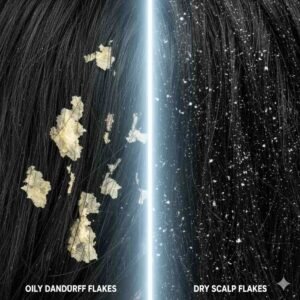
This is a crucial distinction, as the treatments are different.
- Dandruff Flakes: Are typically larger, yellowish or white, and appear oily. Your scalp often feels oily, red, and itchy.
- Dry Scalp Flakes: Are smaller, white, and powdery. Your scalp itself feels dry and tight, not oily. You may have dry skin on other parts of your body as well.
| Feature | Dandruff | Dry Scalp |
| Flakes | Yellowish, oily | White, powdery |
| Itching | Moderate to severe | Mild |
| Cause | Fungal growth, excess oil | Lack of moisture |
| Treatment | Antifungal shampoo | Hydrating shampoo |
If you treat dandruff as a simple dry scalp (for example, by just adding oil), you might make the problem worse.
The Big Question: Can Dandruff Cause Hair Loss?
Let’s address this major concern head-on: Yes, indirectly.
Dandruff itself doesn’t make hair fall out. However, the intense itching it causes leads to scratching. This constant, aggressive scratching can damage your hair follicles, leading to inflammation and breakage, which results in hair thinning and hair fall.
By treating the dandruff and stopping the itch, you protect your hair follicles and can prevent this type of hair loss.
Your Action Plan: How to Get Rid of Dandruff Permanently
A permanent solution requires a two-pronged attack: using the right medicated treatments to get the fungus under control and adopting long-term habits to keep it from coming back.
Step 1: Medicated Dandruff Shampoos (The Heavy Hitters)
This is the most effective and scientifically-backed treatment for dandruff. You need a shampoo with an active ingredient designed to kill the fungus or slow down skin cell turnover.
Look for ingredients that treat the root cause, not just symptoms:
- Salicylic Acid (1–2%) – exfoliates flakes and unclogs pores
- Ketoconazole (1–2%) – antifungal that stops Malassezia
- Zinc Pyrithione or Selenium Sulfide – controls oil and fungus
Use 2–3 times a week, leave on for 2–3 minutes before rinsing.
Step 2: Dandruff Treatment at Home (Effective Home Remedies)
While medicated shampoos are the primary cure, some home remedies can support your treatment, especially for soothing an itchy scalp.
- Apple Cider Vinegar (ACV) Rinse:
- Why it helps: The acidity of ACV may help alter the scalp’s pH, making it harder for yeast to grow.
- How to use: Mix equal parts ACV and water. After shampooing, pour the mixture over your scalp, let it sit for a few minutes, then rinse. Do not use on broken or raw skin.
- Tea Tree Oil:
- Why it helps: Tea tree oil is a natural antifungal.
- How to use: Add a few drops to your regular shampoo. Do not apply it directly to your scalp, as it can be irritating.
- Rosemary oil:
Rosemary oil strengthens hair and prevents dandruff regrowth. - Aloe Vera:
- Why it helps: Aloe vera has soothing, anti-inflammatory properties that can calm an itchy, irritated scalp.
- How to use: Apply pure aloe vera gel directly to your scalp before washing. Let it sit for 30 minutes.
A Note on Oils (Coconut, Olive, Mustard Oil):
There is conflicting information about using oil for dandruff. While oil can help loosen flakes before washing, remember that the Malassezia fungus feeds on oils. If you have true dandruff (not just a dry scalp), leaving oil on your scalp for long periods can potentially make the problem worse.
Step 3: Maintain a Healthy Scalp Routine
- Wash regularly (every 2–3 days)
- Avoid scratching flakes — it spreads infection
- Rinse after workouts or sweating
- Change pillowcases weekly
- Limit styling products that clog scalp pores
Beyond the Scalp: Dandruff on Your Beard, Eyebrows, and Ears
Dandruff (seborrheic dermatitis) isn’t limited to your scalp. It can appear anywhere you have oil glands, including:
- Beard Dandruff: Use your anti-dandruff shampoo to wash your beard 2-3 times a week. Make sure to massage it into the skin beneath the hair.
- Eyebrows and Ears: You can carefully apply a small amount of the lather from your anti-dandruff shampoo to these areas. Be very careful to avoid getting it in your eyes.
The Final Word: Your Journey to a Flake-Free Life
Curing dandruff is not about finding one magic shampoo but about understanding the condition and being consistent with your treatment.
- Identify: Make sure you have dandruff and not just a dry scalp.
- Treat: Use a medicated shampoo with an active ingredient like Ketoconazole or Salicylic acid.
- Maintain: Once clear, continue using the shampoo once a week to prevent dandruff from returning.
- Soothe: Use home remedies like aloe vera to calm itching between treatments.
By following this evidence-based plan, you can finally win the war against dandruff and reclaim your confidence.