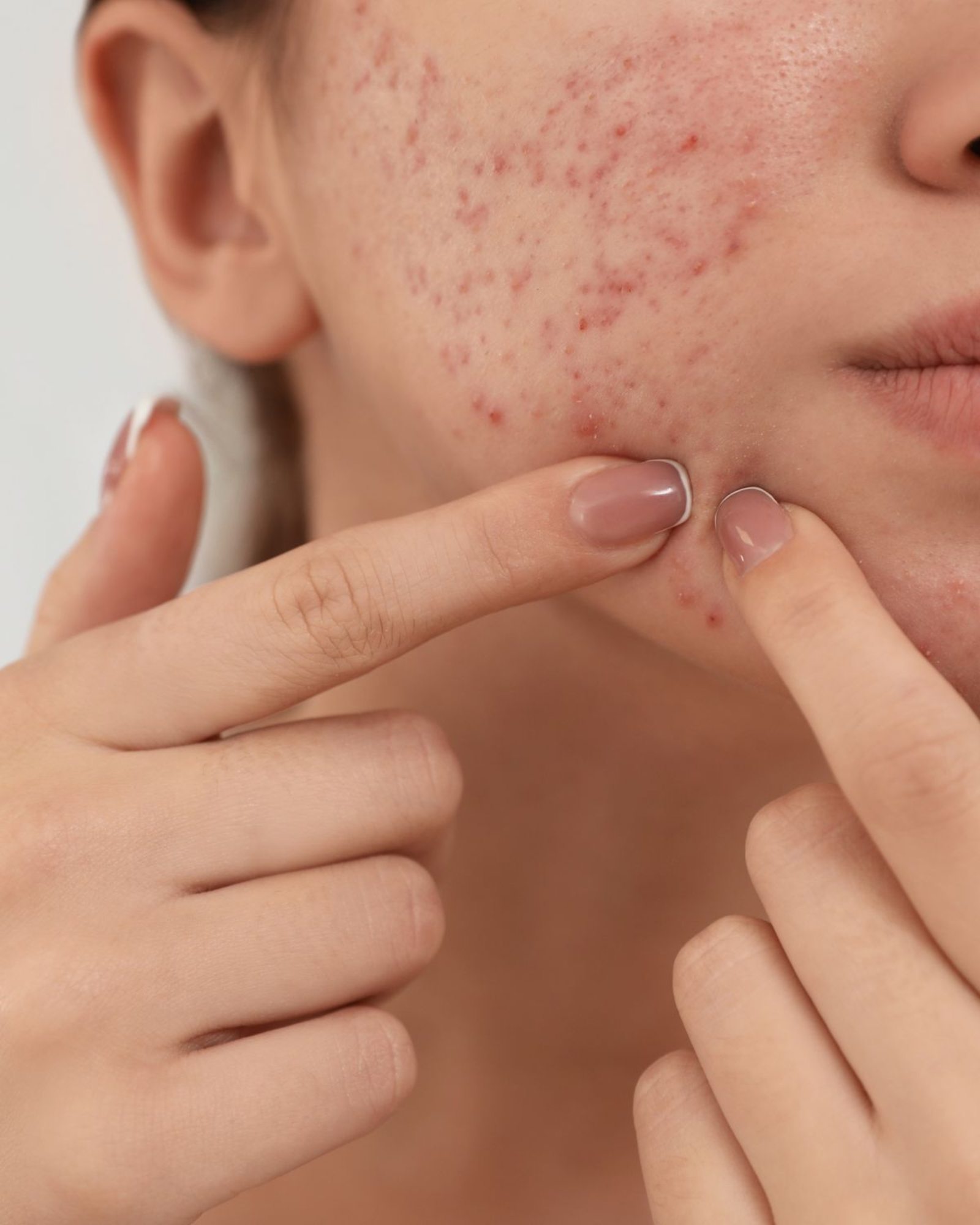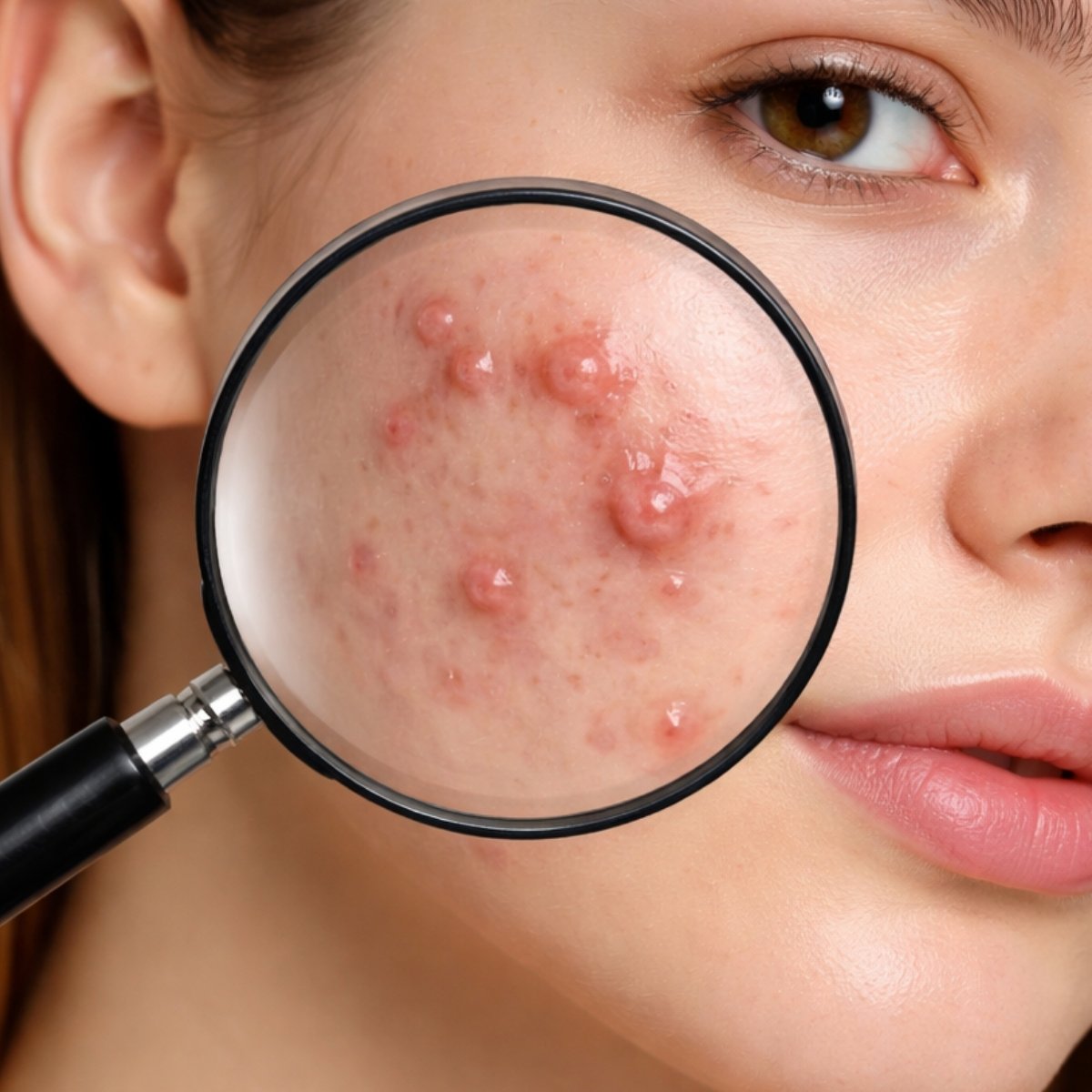
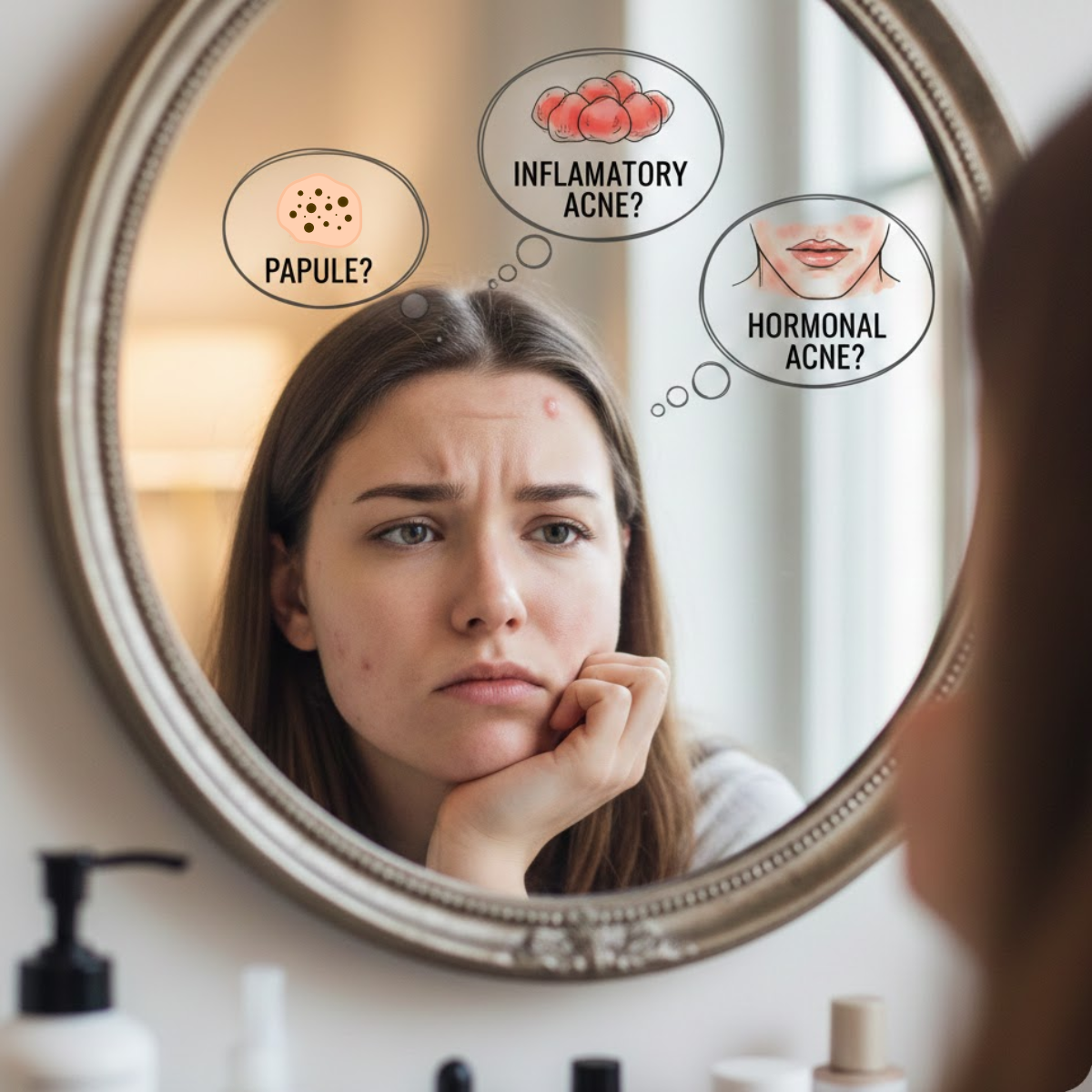
Acne is one of the most common skin problems in the world. But when people search for “types of acne,” they often get confused.
In this guide, I will explain acne in the simplest way possible.
First: Acne Can Be Classified in Different Ways
There are four main ways doctors classify acne:
-
By what it looks like (lesion type)
-
By its cause
-
By age group
-
By severity
Let’s understand each one clearly.
1. Types of Acne Based on What It Looks Like
This is the most basic and important classification.
Acne is divided into two main categories:
- Non-Inflammatory Acne
- Inflammatory Acne
These are categories. Inside them are different types.
Non-Inflammatory Acne
This is mild acne.
There is no redness or swelling.
It happens when oil and dead skin clog your pores.
Blackheads (Open Comedones)
-
Pore stays open
-
Oil reacts with air
-
Turns black
-
Not dirt
Blackheads are very common on the nose and chin.
Whiteheads (Closed Comedones)
-
Pore is closed
-
Oil is trapped under the skin
-
Small white or skin-colored bump
Blackheads and whiteheads together are called comedones.
Almost all acne starts as a comedone.
Inflammatory Acne
This happens when bacteria grow inside a clogged pore.
Your immune system reacts.
Now you see redness, swelling, and pain.
This type has a higher risk of scarring.
Papules
-
Small red bumps
-
No pus
-
Can feel tender
Pustules
-
Red bump with white or yellow center
-
Contains pus
-
What most people call a “pimple”
Nodules
-
Large
-
Hard
-
Deep under the skin
-
Painful
Nodules can leave scars.
Cysts (Cystic Acne)
-
Large
-
Soft
-
Filled with pus
-
Very painful
-
Highest risk of scarring
Cystic acne is one of the most severe forms.
2. Types of Acne Based on Cause
Now let’s talk about terms like hormonal acne and fungal acne.
These are NOT different pimple shapes.
They describe why acne happens.
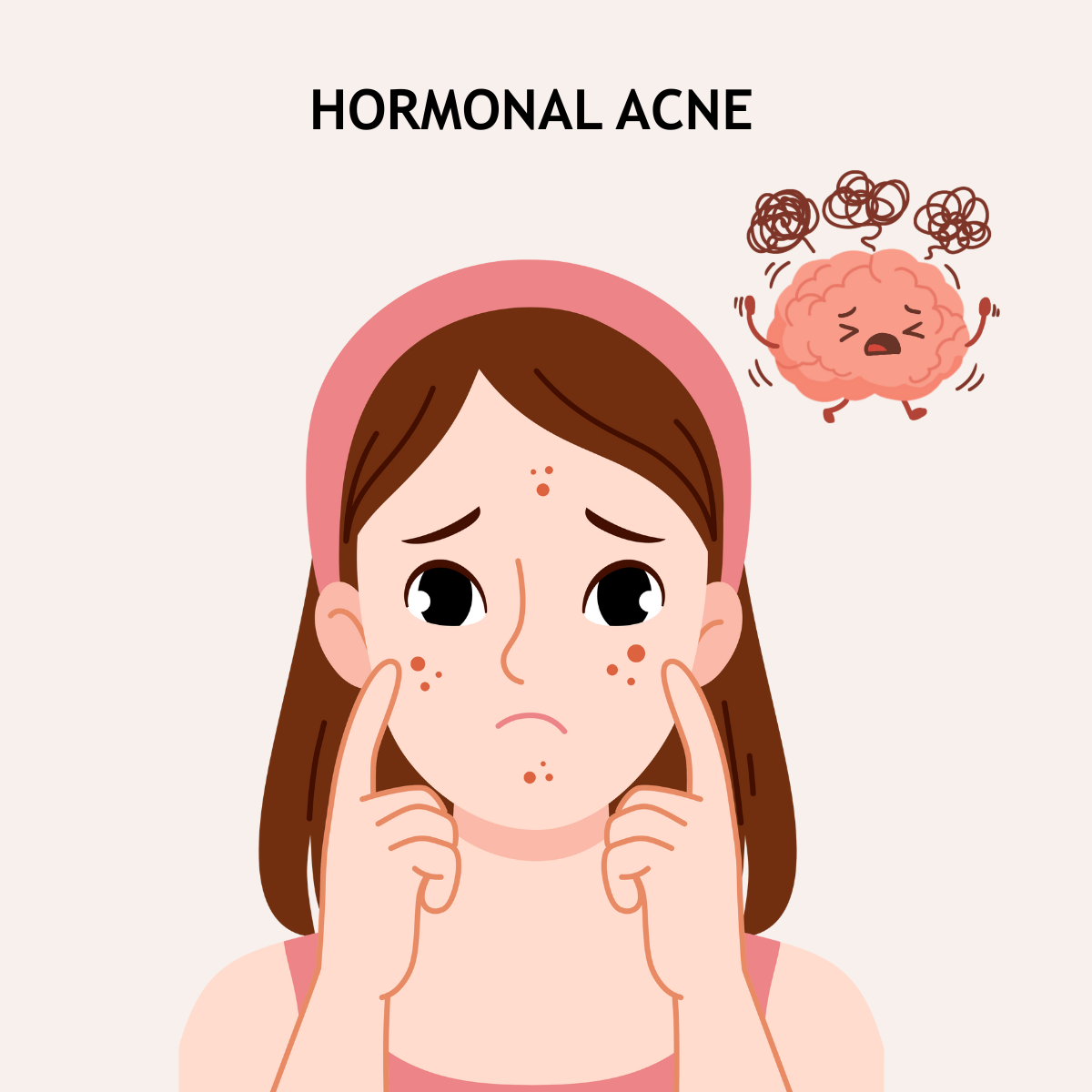
Hormonal Acne
This happens because of hormone changes.
Common signs:
-
Breakouts on jawline and chin
-
Flare-ups before periods
-
Deep, painful acne
-
Common in PCOS
Hormonal acne often appears as cysts or nodules.
Fungal Acne
This is actually not true acne.
Medical name: Malassezia folliculitis.
It is caused by yeast, not bacteria.
Signs:
-
Small bumps that look similar
-
Itchy
-
Mostly on forehead, chest, back
-
Does not respond to normal acne treatments
Many people confuse fungal acne with regular acne.
Acne Mechanica
Caused by friction and sweat.
Examples:
-
Mask acne (maskne)
-
Helmet acne
-
Gym acne
Tight clothing and sweating can trigger this.
Stress Acne
Stress increases cortisol.
This increases oil production.
More oil → more breakouts.
Diet-Related Acne
Some people break out after:
-
High sugar food
-
Processed food
-
Dairy
Not everyone is affected, but it can be a trigger.
3. Types of Acne Based on Age
Acne can look different at different ages.
Teenage Acne
-
Happens during puberty
-
Very oily skin
-
Blackheads + pimples
This is very common.
Adult Acne
-
Happens after age 25
-
More common in women
-
Often hormonal
-
Usually around chin and jaw
Adult acne can be stubborn and long-lasting.
Baby Acne (Neonatal Acne)
-
Happens in newborns
-
Caused by maternal hormones
-
Usually clears on its own
4. Types of Acne Based on Severity
Doctors also classify acne by how serious it is.
Mild Acne
-
Mostly blackheads and whiteheads
-
Few pimples
Moderate Acne
-
More papules and pustules
-
Some redness and inflammation
Severe Acne
-
Nodules and cysts
-
Painful
-
High risk of scarring
Severe acne should be treated early to prevent permanent marks.
Important Clarification
Many people think:
“Hormonal acne is a type like cystic acne.”
That is not correct.
Cystic acne describes how it looks.
Hormonal acne describes why it happens.
Hormonal acne often appears as cystic acne.
Understanding this difference helps you choose the right treatment.
Why Understanding Your Acne Type Matters
If you don’t know your acne type:
-
You may use the wrong products
-
You may irritate your skin
-
You may make acne worse
-
You increase risk of scars
For example:
-
Fungal acne needs antifungal treatment
-
Cystic acne may need stronger medical care
-
Comedonal acne needs pore-clearing ingredients
Correct diagnosis is the first step to clear skin.
Summary:
Acne can be understood in four simple ways. First, by how it looks: non-inflammatory acne includes blackheads and whiteheads, while inflammatory acne includes papules, pustules, nodules, and cysts. Second, by what causes it: hormonal acne is triggered by hormone changes, fungal acne is caused by yeast (not bacteria), and breakouts can also be linked to stress, diet, or friction like masks and helmets. Third, acne can be grouped by age, such as teenage acne, adult acne, or baby acne. Finally, doctors also classify acne by severity—mild, moderate, or severe—depending on how deep and widespread the breakouts are. Understanding which type of acne you have is important because the right treatment depends on both how it looks and why it is happening.